The Short Answer
A New Jersey DWI under N.J.S.A. 39:4-50 is a motor vehicle offense, and on its own it is heard in the municipal court of the town where the stop happened. It moves to Superior Court when the same incident also produces an indictable charge, meaning a crime under Title 2C. Common examples are assault by auto after a crash with injuries, driving while suspended for a prior DWI or refusal, vehicular homicide and eluding police.
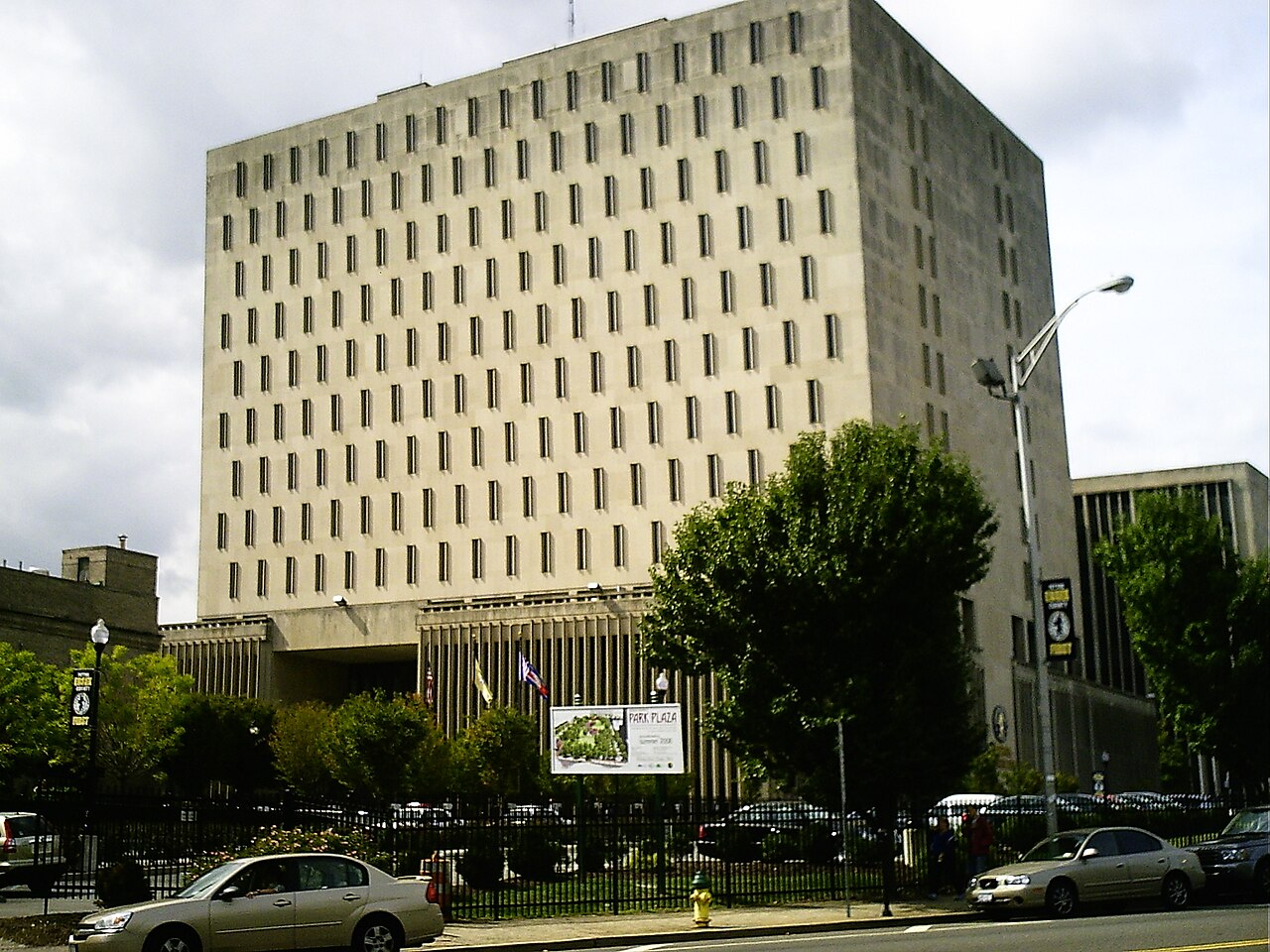
When that happens, Court Rule 3:15-3 says the Superior Court shall join the pending DWI ticket with the criminal case for trial. The criminal charge may go to a jury. The DWI does not. The Superior Court judge sits as a municipal court judge on the DWI and decides it on the evidence presented at the same trial, after the jury has returned its verdict. In Essex County, that means the case is handled in Newark by the Superior Court, Criminal Division, and prosecuted by the Essex County Prosecutor's Office rather than a municipal prosecutor.
Which Charges Pull a DWI Out of Municipal Court
The DWI doesn't change. What changes is what else is charged from the same episode. These are the indictable offenses that most often come with a DWI:
| Charge | Statute | How it connects to a DWI |
|---|---|---|
| Assault by auto | N.J.S.A. 2C:12-1(c) | Reckless driving that causes injury. Driving in violation of 39:4-50 or the refusal statute raises the grade: a third-degree crime if serious bodily injury results, fourth-degree if bodily injury results, and higher in some locations such as near schools. |
| Driving while suspended for DWI or refusal | N.J.S.A. 2C:40-26 | A fourth-degree crime in two situations: driving while suspended for a second or later DWI or refusal, or while suspended for a first offense after a prior conviction for driving during that same suspension. The statute requires a fixed minimum of 180 days without parole. |
| Vehicular homicide | N.J.S.A. 2C:11-5 and 2C:11-5.3 | A death caused by reckless driving, or under the strict liability statute, by driving in violation of 39:4-50. See our strict liability vehicular homicide page. |
| Eluding | N.J.S.A. 2C:29-2(b) | Knowingly fleeing after a signal to stop. A third-degree crime, or second-degree if the flight creates a risk of death or injury. See DWI and eluding. |
| Other crimes from the same stop | Title 2C | Drug possession found in the car, weapons offenses, or endangering the welfare of a child where prosecutors charge it in addition to the Title 39 child-passenger offense. |
A crash alone doesn't send a DWI to Superior Court. A collision with property damage and no injury usually stays in municipal court with the DWI and whatever other tickets were issued. Our page on DWI accidents with injuries covers the line between those cases and assault by auto, and our driving-while-suspended guide explains when a suspended-license stop becomes the fourth-degree crime.
What Rule 3:15-3 Actually Requires
Rule 3:15-3 is short, and every part of it matters to a person facing both kinds of charges.
- Mandatory joinder. Paragraph (a)(1) says that, unless relief is granted, the court shall join any pending non-indictable complaint with a criminal offense based on the same conduct or arising from the same episode. The DWI summons, the reckless driving ticket and the other motor vehicle tickets from that night all come along.
- The judge decides the DWI. Paragraph (a)(2) says the Superior Court judge sits as a municipal court judge on the complaint and renders the verdict on the proofs adduced at trial, whether or not a jury hears the criminal charge. Certain disorderly persons offenses that must go to a jury under N.J.S.A. 2C:1-8(e) are the exception, and a DWI isn't one of them.
- Evidence for one but not the other. Under paragraph (a)(3), evidence admissible on the DWI but not on the criminal charge is heard outside the jury's presence. The judge can't announce the DWI verdict until the jury has returned its verdict or been dismissed.
- Relief from joinder. Paragraph (b) lets the court decline to join the cases, or grant other relief, if joinder prejudices the defendant or the State. A defendant who asks to avoid joinder waives any double jeopardy claim that would not have arisen if the request had been denied. That trade-off is a decision for you and your lawyer.
- No windfall from a missed joinder. Under paragraph (c), a failure to join doesn't, by itself, bar a later prosecution of the ticket, except where a statute or the Constitution requires it.
One Trial, Two Fact-Finders
The practical effect is that a jury and a judge can hear the same witnesses and reach separate conclusions. State v. Stanton, 176 N.J. 75 (2003), shows how this works. The defendant was indicted for second-degree vehicular homicide after a fatal crash and also received summonses for DWI, reckless driving and other motor vehicle offenses. The vehicular homicide went to the jury while the motor vehicle offenses were tried at the same time before the judge, who found the defendant guilty of all of them. The case reached the Supreme Court over whether the jury, not the judge, had to find intoxication before a mandatory parole bar could be imposed for the homicide.
Timing can matter too. In State v. Snellbaker, 272 N.J. Super. 129 (App. Div. 1994), the Appellate Division held that when a jury hangs on the related indictable counts, the judge should withhold findings on the non-indictable charges until the final jury in the case is dismissed. A DWI joined to a criminal case can stay open longer than a stand-alone DWI.
There is still no jury for the DWI itself. That rule is the same in Superior Court as in municipal court; our page on jury trials and DWI explains where it comes from.
How a Case Gets Screened in Essex County
Whether a DWI case ends up in Superior Court often turns on an early screening decision. The Essex County Prosecutor's Office says all criminal complaints in the county that charge an indictable crime are screened to identify cases that properly belong in Superior Court. Its Initial Screening Unit reviews indictable complaints from all 22 Essex County municipal courts, and its Central Judicial Processing unit performs a second level of screening.
According to the Prosecutor's Office, screening attorneys can administratively dismiss charges, downgrade them to non-indictable offenses, or downgrade them and refer the case to its Special Remand Court. The office lists the nature of the offense, the surrounding circumstances, the quality of the evidence and the defendant's history among the factors considered. If an indictable charge from your DWI stop is downgraded and sent back, the DWI generally goes back with it and is heard in the municipal court where it was filed. You can find that court on our Essex County municipal courts page.
If the indictable charge stays, the case proceeds in the Superior Court, Criminal Division, for the Essex Vicinage. The Judiciary lists the Criminal Division main office at the Essex County Veterans Courthouse, 50 West Market Street, Newark. Indictable charges go through the grand jury and pretrial stages there, and the joined DWI travels alongside them.
Facing a DWI and a criminal charge from the same night? These cases involve two sets of consequences and more than one court, and early decisions, such as whether to oppose joinder, can't be undone later. Talk to a licensed New Jersey attorney who handles both.
Request a Confidential ConsultationWhat Doesn't Change in Superior Court
The DWI keeps its character as a Title 39 motor vehicle offense. The elements the State has to prove under N.J.S.A. 39:4-50 are the same, the Alcotest and blood-test foundation rules are the same, and the penalties for a DWI conviction (fines, license consequences, ignition interlock and the Intoxicated Driver Resource Center) come from the same statute whether a municipal judge or a Superior Court judge imposes them. The State must still prove the DWI beyond a reasonable doubt.
What changes is everything around it. The prosecutor is the county office, not the town's municipal prosecutor. Discovery in the criminal case runs under the Part 3 criminal rules rather than municipal Rule 7:7-7. Pretrial release decisions on the indictable charge follow the criminal justice reform process. And the consequences of the crime, which can include state prison exposure, a criminal record and, under 2C:40-26, a mandatory jail term, are usually the larger part of the case.
Questions to Raise With Your Lawyer
- Is the indictable charge supported? Assault by auto depends on recklessness and on the level of injury. Driving while suspended under 2C:40-26 depends on why the license was suspended and on the record of prior suspension convictions. Each element is worth checking.
- Is a downgrade realistic? The Prosecutor's Office screens indictable complaints and can send cases back to municipal court. Whether that is likely depends on the facts.
- Should joinder be opposed? Rule 3:15-3(b) allows relief from joinder for prejudice, but a defendant's request has double jeopardy consequences.
- What does a DWI result mean for the criminal case, and the reverse? In a joined trial the same evidence is heard once. How the State uses intoxication to prove recklessness, as it did in Stanton, shapes both outcomes.
- What are the license consequences in the meantime? Suspensions already in place still apply while the case is pending. Driving during one is how many 2C:40-26 cases start.
Sources
- Rules Governing the Courts of the State of New Jersey, Rule 3:15-3 (Trial of Criminal Offenses and Lesser, Related Infractions)
- State v. Stanton, 176 N.J. 75 (2003)
- State v. Snellbaker, 272 N.J. Super. 129 (App. Div. 1994)
- N.J.S.A. 2C:12-1(c): Assault by auto or vessel
- N.J.S.A. 2C:40-26: Operating a motor vehicle during license suspension, fourth degree crime
- N.J.S.A. 39:4-50: Driving while intoxicated
- Essex County Prosecutor's Office: Initial Screening and Central Judicial Processing Units
- New Jersey Courts: Directory of Criminal Division Offices (Essex: Veterans Courthouse, 50 West Market Street, Newark)
- New Jersey Courts: Essex Vicinage Offices and Divisions
This page summarizes New Jersey court rules, statutes and decisions as of November 2026 for education only. It is not legal advice, does not predict how any court or prosecutor will act, and no outcome is guaranteed. Confirm your situation with a licensed New Jersey attorney.
Thank You
We received your request. Someone will be in touch promptly to discuss your situation.
DWI in Superior Court: Questions
DWI and a criminal charge from the same night?
Essex County DWI defense marketing resource. Confidential consultation requests welcome.