The Short Answer
If you hold a New Jersey license and you are arrested for drunk driving in New York, you are dealing with two separate systems. The criminal or traffic case is a New York case, prosecuted in a New York court under New York's Vehicle and Traffic Law. New York can't suspend a New Jersey license, but the New York DMV can suspend or revoke your privilege to drive in New York. Then, if you are convicted, New York reports the conviction to New Jersey under the Interstate Driver License Compact, and the New Jersey Motor Vehicle Commission can suspend your New Jersey driving privilege as if the offense had happened here.
The part that surprises most people: even New York's lower-level charge, Driving While Ability Impaired (DWAI), has been treated by New Jersey as substantially similar to a New Jersey DWI. That has two consequences. The MVC can act on it, and a New Jersey court can count it as a prior offense if you are ever charged with DWI in New Jersey later.
Two Cases, Two States, Several Agencies
It helps to see the moving parts side by side, because each one runs on its own schedule and sends its own paperwork.
| Who | What they decide | What it affects |
|---|---|---|
| New York court (city, town or village court, or county court) | The charge under N.Y. Vehicle and Traffic Law §1192: guilty, not guilty, or a plea to a lesser charge, plus fines and any jail term. | Your New York record and the conviction that gets reported to New Jersey. |
| New York DMV | Suspension or revocation tied to the conviction or a chemical test refusal. | Your privilege to drive in New York. The DMV says your out-of-state license may still be valid in other states. |
| New Jersey MVC | Whether to suspend your New Jersey driving privilege based on the reported out-of-state conviction. | Your New Jersey license, which is the one you use to drive everywhere. |
| Any future New Jersey court | Whether the New York conviction counts as a prior offense. | The penalty tier on any later New Jersey DWI. |
What New York Can Do on Its Own
New York's DMV publishes its penalty table for alcohol and drug-related violations. It separates a full DWI (a BAC of 0.08% or more, or other evidence of intoxication) from aggravated DWI (0.18% or more) and from DWAI by alcohol, which it describes as a BAC of more than 0.05% but less than 0.07%, or other evidence of impairment. According to that table, a first DWI carries a $500 to $1,000 fine, up to a year in jail and a license revocation of at least six months, while a first DWAI carries a $300 to $500 fine, up to 15 days in jail and a 90-day suspension. A chemical test refusal is handled separately, with a civil penalty and a revocation of at least one year. The table lists additional surcharges and fees on top.
For a New Jersey driver, those New York license actions land on the New York driving privilege. New York's DMV explains that if your license was issued by another state, it can revoke your privilege to drive in New York, but your out-of-state license may still be valid elsewhere. That sentence is accurate and easy to misread. It describes what New York itself does. It says nothing about what New Jersey does once it hears about the conviction, which is the next section.
How the Conviction Gets Back to New Jersey
New Jersey and New York both belong to the Interstate Driver License Compact, codified in New Jersey at N.J.S.A. 39:5D-1 through 39:5D-14. Member states report convictions to a driver's home state. Article IV of the compact, at N.J.S.A. 39:5D-4, tells the home state's licensing authority to give the reported conduct the same effect it would have if it had happened at home, and drunk driving is one of the listed offenses.
The MVC's published decisions show how that plays out in practice. In a 2022 final decision, the Commission described receiving a compact notification from the New York DMV that a New Jersey licensee had been convicted of DWAI in a New York town court. The MVC issued a Scheduled Suspension Notice for a 90-day suspension of the driver's New Jersey privilege, citing N.J.S.A. 39:4-50 and 39:5D-4 among other provisions. The driver requested a hearing, and the suspension was imposed. That case involved a 2019 arrest, and the term in your case will depend on the rules that apply to it. The structure is the useful part: notice, opportunity for a hearing, and then a decision.
That hearing is not a second trial of the New York case. In the same decision, the MVC told the driver the hearing was not an opportunity to re-litigate the New York matter or collaterally attack the conviction. What the Commission said it would consider was narrow, and it is covered next.
Got a New York DWI or DWAI and a New Jersey license?
The New Jersey side is often decided by paperwork from the New York case. Ask about your New Jersey license and record before the New York case is resolved, not after the MVC letter arrives.
Request a Confidential ConsultationWhy a New York DWAI Isn't a Free Pass in New Jersey
In New York, a first DWAI by alcohol is a traffic infraction, and a plea from DWI down to DWAI is a common resolution. Plenty of New Jersey drivers take that plea believing they have avoided a drunk-driving conviction. New Jersey sees it differently.
New Jersey's DWI statute, N.J.S.A. 39:4-50(a)(3), says a conviction of a substantially similar law in another jurisdiction counts as a prior conviction, unless the defendant shows by clear and convincing evidence that the out-of-state conviction was based exclusively on a blood alcohol concentration below 0.08%. In State v. Zeikel (App. Div. 2011), the Appellate Division applied that language to New York DWAI convictions. It relied on an earlier compact case, Division of Motor Vehicles v. Lawrence (App. Div. 1983), which had held that a New York DWAI is of a substantially similar nature to a New Jersey DWI. Zeikel reasoned that New Jersey interprets intoxication to include any degree of impairment in driving ability. Without clear and convincing proof that the New York convictions rested only on a BAC under 0.08%, the court held they were properly counted in sentencing.
The MVC used the same test in the 2022 decision described above. The driver argued his DWAI plea was based on a BAC under 0.08%. The Commission obtained the New York plea transcript and court records, found nothing in the transcript establishing that a sub-0.08% BAC was the exclusive basis of the conviction, and noted that the records it obtained reported a higher breath result. The suspension stood.
The lesson isn't that a DWAI plea is always a mistake. It is that what the New York record says, and what it doesn't say, can decide the New Jersey consequences. Those questions are best raised while the New York case is still open.
It Can Change the Penalty on a Future New Jersey DWI
New Jersey sets DWI penalties by offense number. Because a qualifying out-of-state conviction counts as a prior, a New York conviction can turn a later New Jersey arrest into a second or third offense, with the longer license loss, interlock requirements and possible jail that come with those tiers. Our second offense DWI guide covers that tier, and the step-down statute guide explains how a gap of more than ten years between offenses can affect sentencing. The full schedule is on our New Jersey DWI penalties page.
What About a Refusal in New York?
New York treats a chemical test refusal as a DMV matter with its own revocation and civil penalty, separate from the criminal charge. How a New York refusal finding affects a New Jersey driver is a different question from how a conviction does, because the compact article the MVC relies on is written around convictions. It is a fact-specific issue, and it is worth asking a New Jersey DWI attorney about directly. Our page on whether a refusal counts as a prior DWI in New Jersey covers how New Jersey treats its own refusals.
Where Essex County Drivers Run Into This
For people who live in Essex County, New York is not an occasional trip. It is a commute, a night out and a weekend away. The situations we hear about tend to look like these:
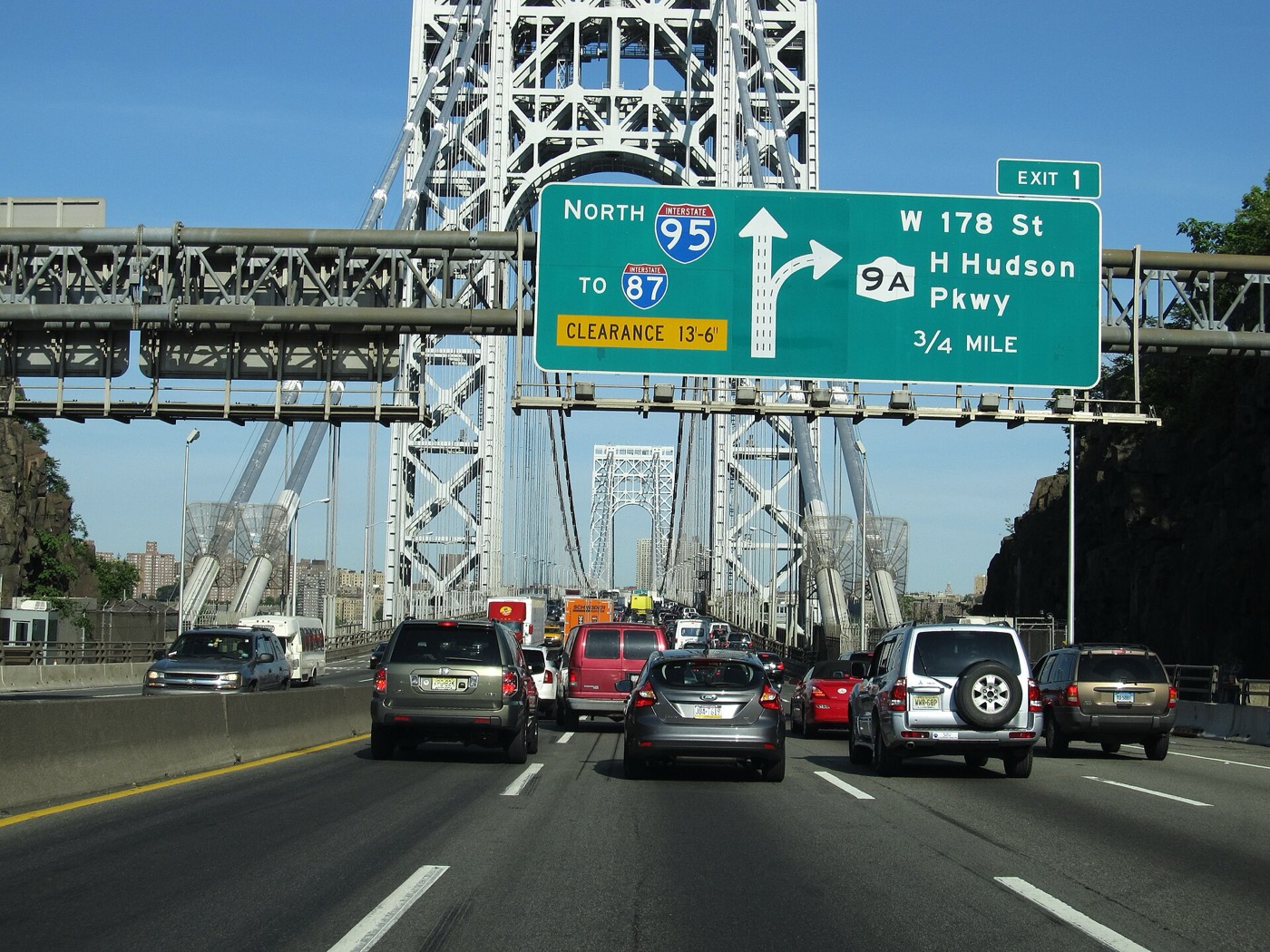
- A night in Manhattan or the Bronx, driving home over the George Washington Bridge or toward the Lincoln or Holland Tunnel approaches.
- Westchester and Rockland dinners, games and family events, with the drive back on the Thruway or the Palisades.
- Upstate weekends in the Hudson Valley, the Catskills or ski country, where cases are often heard in small town or village courts that meet on limited evenings.
- Work driving in a company vehicle or with a commercial license, which brings separate employer and licensing consequences; see our CDL DWI guide.
What to Do If You Were Charged in New York
- Don't ignore the New York court date. The case is in New York whether or not you live there, and missing court creates new problems in that state.
- Keep every document. The tickets or accusatory instruments, any breath test record you were given, release paperwork and anything from the New York DMV. If the case is resolved, ask for the certificate of disposition; the MVC's published decision shows it relied on New York court records.
- Get advice on both sides of the river. You will likely need a lawyer admitted in New York for the New York case. The New Jersey license and prior-offense questions are New Jersey law. Ask both before you accept a plea.
- Watch your New Jersey mail. An MVC Scheduled Suspension Notice explains the proposed action and how to request a hearing by the deadline it sets. Keep your MVC address current.
- Don't drive on a suspended privilege in either state. Check your status in New York and New Jersey before getting behind the wheel. See driving on a suspended license in New Jersey.
The Reverse Situation
If you are a New York or other out-of-state driver charged in New Jersey, the flow runs the other direction: the case is heard in a New Jersey municipal court, and your home state decides what to do with the conviction. Our out-of-state DWI in New Jersey page covers that case.
Sources
- N.J.S.A. 39:4-50: Driving while intoxicated (prior conviction in another jurisdiction, clear and convincing evidence of BAC below 0.08%)
- N.J.S.A. 39:5D-4: Interstate Driver License Compact, Article IV (effect of conviction)
- State v. Zeikel, App. Div. 2011 (New York DWAI convictions as prior offenses; discussing Div. of Motor Vehicles v. Lawrence, App. Div. 1983)
- New Jersey MVC, Final Administrative Decision and Order of Suspension, In re Chok (September 2022): New York DWAI reported under the compact, 90-day suspension
- New York DMV, Penalties for Alcohol or Drug-Related Violations
- New York DMV, Suspensions and Revocations (out-of-state license holders)
This page summarizes New Jersey and New York statutes, agency guidance and published decisions as of November 2026 for education only. It is not legal advice, does not predict how any court or agency will rule, and no outcome is guaranteed. A New York charge should be handled by a lawyer admitted in New York; confirm the New Jersey consequences with a licensed New Jersey attorney.
Thank You
We received your request. Someone will be in touch promptly to discuss your situation.
New York DWI With a New Jersey License: Questions
Charged with DWI in New York and licensed in New Jersey?
Essex County DWI defense marketing resource. Confidential consultation requests welcome.