The Short Answer
New Jersey's DWI statute, N.J.S.A. 39:4-50(a), makes it an offense to operate a motor vehicle “while under the influence of intoxicating liquor, narcotic, hallucinogenic or habit-producing drug.” Nothing in that language carves out medicine you bought legally at a pharmacy or a supermarket. So if an officer sees driving and behavior that look impaired, a Breathalyzer reading near zero does not end the night. The officer may call in a drug recognition expert, ask for a urine or blood sample, and issue a DWI summons on the theory that a drug caused the impairment.
The harder part, for the State, comes later. In a drug-based DWI, the prosecutor has to prove two things beyond a reasonable doubt: that you were actually impaired, and that the cause was a narcotic, hallucinogenic or habit-producing drug. New Jersey's Supreme Court and Appellate Division have both said that the second element needs independent evidence. Officers' impressions are not enough. That is where many over-the-counter medication cases are won or lost.
Which Over-the-Counter Products Come Up in DWI Stops
Most of the drugs that show up in these cases are ordinary household items. The ones most often discussed in impaired-driving research and in police training are sedating antihistamines and cough suppressants:
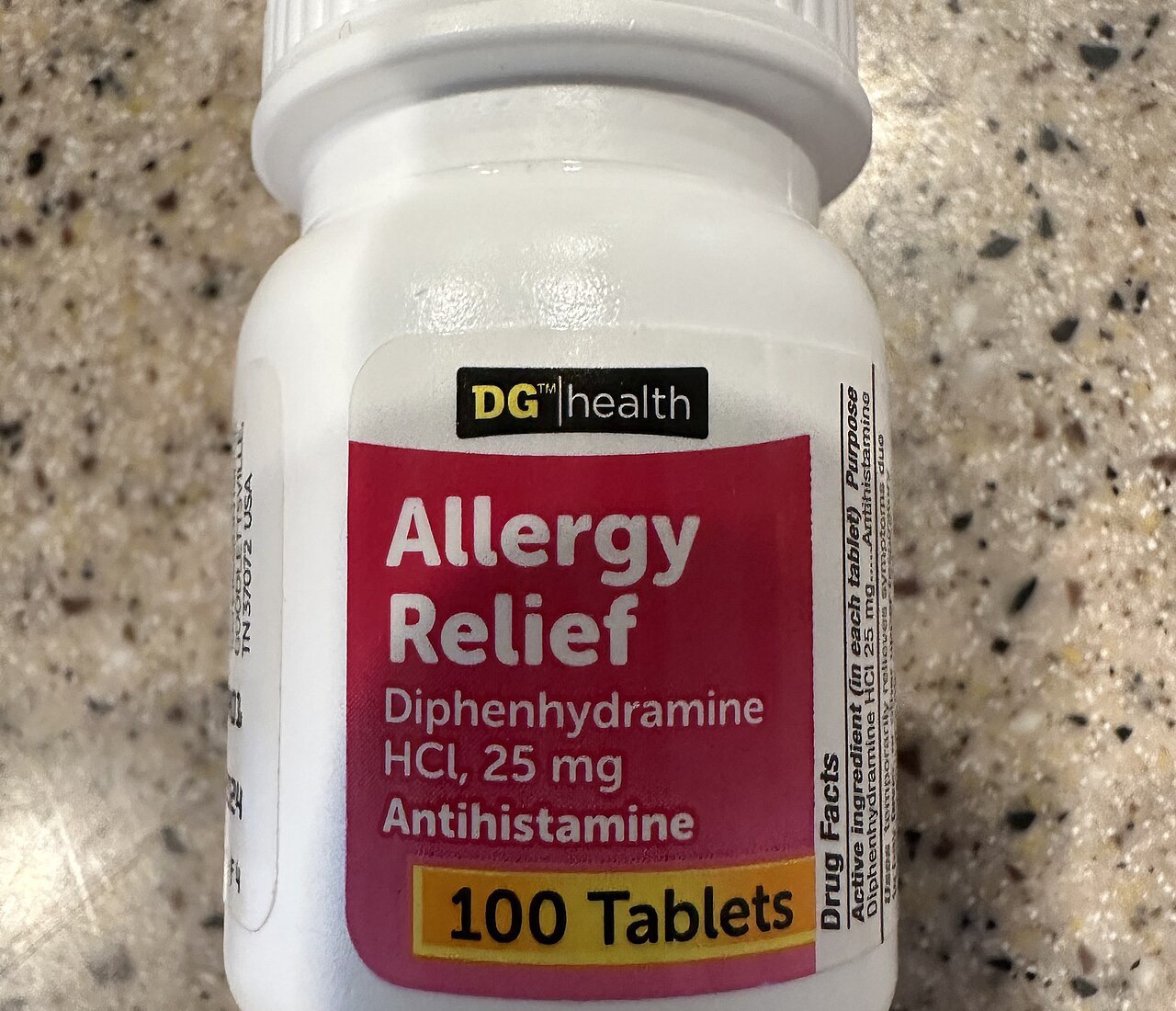
- Diphenhydramine, the active ingredient in Benadryl and in many “PM” sleep aids and pain-relief combinations. A federal review of drugs and driving performance cited in legal scholarship found that diphenhydramine repeatedly impaired tracking and reaction time in testing.
- Doxylamine, the antihistamine in NyQuil and in some store-brand sleep tablets.
- Dextromethorphan (DXM), the cough suppressant in many cold and flu formulas. At label doses it is generally not thought of as an impairing drug, but at doses far above the label it can produce dissociative effects, and prosecutors sometimes point to that.
- Liquid cold medicines that contain alcohol. These can matter for a completely different reason, covered below.
The Drug Facts panel on sedating antihistamines warns that marked drowsiness may occur, that alcohol, sedatives and tranquilizers may increase drowsiness, and that users should be careful driving a motor vehicle. In court, that label cuts both ways. The State may use it to argue you were on notice. Your lawyer may use it to show the product is a common antihistamine, not the kind of narcotic or hallucinogen the statute names, and to ask whether anyone actually proved it was in your system.
What the State Has to Prove
1. Impairment, the same standard as alcohol
The impairment standard comes from State v. Tamburro, 68 N.J. 414 (1975), and has been repeated in drug cases ever since: a “substantial deterioration or diminution of the mental faculties or physical capabilities” of the driver. Swerving, a slow response to lights, slurred speech and poor performance on field sobriety tests are the usual proofs. Fatigue, illness and medical conditions can produce many of the same signs, which is why our page on medical conditions that mimic impairment matters in these cases too.
2. The cause was a qualifying drug
Unlike alcohol, New Jersey has no per se limit for drugs. The Supreme Court said so directly in State v. Olenowski, 255 N.J. 529 (2023): a driver at or above 0.08% BAC is guilty per se, “but there is no equivalent per se violation in this state for persons who drive with impairment-causing drugs in their system.” So the State cannot simply show a drug was present. It has to connect the impairment to a narcotic, hallucinogenic or habit-producing drug.
In State v. Bealor, 187 N.J. 574 (2006), the Court held that police officers and other lay witnesses can testify that a driver seemed intoxicated, but cannot give an opinion that the cause was a drug rather than alcohol. What makes a drug case sufficient is competent lay observation of intoxication “coupled with additional independent proofs” of drug consumption. In Olenowski, the Court also said testimony from a drug recognition expert cannot, by itself, establish impairment.
Breath test at or near zero, but charged with DWI anyway?
In a drug-based case, the questions are what the police actually collected (a DRE evaluation, a urine or blood sample, a lab report) and whether it ties the impairment to a drug the statute covers. A lawyer can request that discovery before your first court date.
Request a Confidential ConsultationThe Essex County Case That Shows the Rule in Action
In State v. Carambot (App. Div. 2024), an appeal arising from Essex County, the driver was convicted after a trial de novo in the Law Division. The judge accepted that there was no evidence the driver had consumed alcohol and found he was under the influence of drugs based on the officers' observations and body-worn camera footage. None of the officers who testified was a drug recognition expert, no DRE evaluation was requested, and no warrant was sought for a blood or urine sample.
The Appellate Division accepted that the driver appeared impaired, but reversed and vacated the conviction. Following Olenowski, it held that drug impairment has to be proven with some independent evidence beyond lay witnesses' observations, and here the State “failed to present any evidence to establish that the cause of the impairment was either narcotics, hallucinogens, or habit-producing drugs.”
Carambot did not involve an over-the-counter drug, and every case turns on its own record. But it shows the shape of the issue. When the evidence that a drug caused the impairment is thin, that gap can be decisive.
Is an Over-the-Counter Drug “Habit-Producing”?
The statute does not define “narcotic, hallucinogenic or habit-producing drug,” and the case law has said the State does not have to identify the specific drug or a particular quantity. That is why prescription sedatives and opioids are usually easier for the State: their classification is rarely disputed. Diphenhydramine, doxylamine and label-dose dextromethorphan are not controlled substances, and we did not find a published New Jersey appellate decision squarely holding that any of them is a habit-producing drug under 39:4-50.
That does not mean a charge involving one of them will be dismissed. It means the classification is a genuine issue the defense can test, usually through the State's toxicology and expert evidence and, where appropriate, a defense expert. The analysis is close to the one in prescription cases, which our page on prescription drug DWI in New Jersey walks through in more detail.
Alcohol in Liquid Cold Medicine: A Separate Problem
Some liquid nighttime cold medicines contain alcohol as an inactive ingredient. The label on Vicks NyQuil Cold & Flu liquid, as published on the National Library of Medicine's DailyMed database, says “Alcohol 10%,” with a 30 mL dose cup. That works out to about 3 mL of alcohol per dose, roughly 2.4 grams, compared with the 14 grams of pure alcohol in a U.S. standard drink as defined by the National Institute on Alcohol Abuse and Alcoholism.
Two consequences follow. First, a dose taken as directed is a small amount of alcohol, but it is not zero, and it adds to whatever else you drank that evening. If the charge is based on a breath reading, the alcohol in the medicine is part of the math. Second, liquid taken shortly before a breath test can leave residual alcohol in the mouth. The New Jersey Supreme Court's decision in State v. Chun, 194 N.J. 54 (2008), requires a 20-minute observation period before an Alcotest sample, in part to guard against that. If medicine was taken during or shortly before that window, the observation record is worth a close look.
How These Cases Usually Unfold After the Stop
- The breath test comes back low. If the officer still believes you are impaired, that is the point where a drug theory begins.
- A DRE evaluation may be requested. A drug recognition expert runs a structured, multi-step evaluation and forms an opinion about the drug category involved. See our page on DRE evaluations for what that involves and how Olenowski limits its weight.
- Police may seek a urine or blood sample. New Jersey's refusal law covers breath samples. Blood and urine generally require a warrant, valid consent or genuine exigency.
- Lab results take time. Toxicology reports often arrive weeks after the arrest, so the first court date may be adjourned while discovery is completed.
- The case is heard in the municipal court where the stop happened, in front of a judge, not a jury.
What to Do This Week
- Write down exactly what you took, how much and when, while you still remember, and keep the packaging. Share it with your lawyer, not with anyone else.
- Note any medical conditions, illness or lack of sleep that night. These can matter to whether impairment, and its cause, can be proven.
- Do not drive in violation of any license restriction pending the case, and read your summons for the court date.
- Ask a lawyer to request the full discovery: the DRE report and face sheet, the toxicology lab report and chain of custody, body-worn and dash camera video, and the Alcotest records.
The sentencing schedule for a drug-based DWI is the same statute as an alcohol case. Our New Jersey DWI penalties page summarizes it.
Sources
- N.J.S.A. 39:4-50: Driving while intoxicated
- State v. Olenowski, 255 N.J. 529 (2023) (NJ Courts PDF)
- State v. Carambot, A-1228-22 (App. Div. 2024), Essex County (NJ Courts PDF)
- State v. Wendler, A-0414-17 (App. Div. 2019), quoting State v. Bealor, 187 N.J. 574 (2006), and State v. Tamburro, 68 N.J. 414 (1975) (NJ Courts PDF)
- DailyMed (NLM): Vicks NyQuil Cold & Flu liquid label
- NIAAA: What Is a Standard Drink?
This page summarizes New Jersey statutes, court decisions and federal label data as of November 2026 for education only. It is not legal advice, does not predict how any court will rule, and no outcome is guaranteed. Do not stop or change a medication without talking to your doctor. Talk to a licensed New Jersey attorney about your situation.
Thank You
We received your request. Someone will be in touch promptly to discuss your situation.
Over-the-Counter Medication DWI: Questions
Charged with DWI after taking over-the-counter medicine in Essex County?
Essex County DWI defense marketing resource. Confidential consultation requests welcome.